

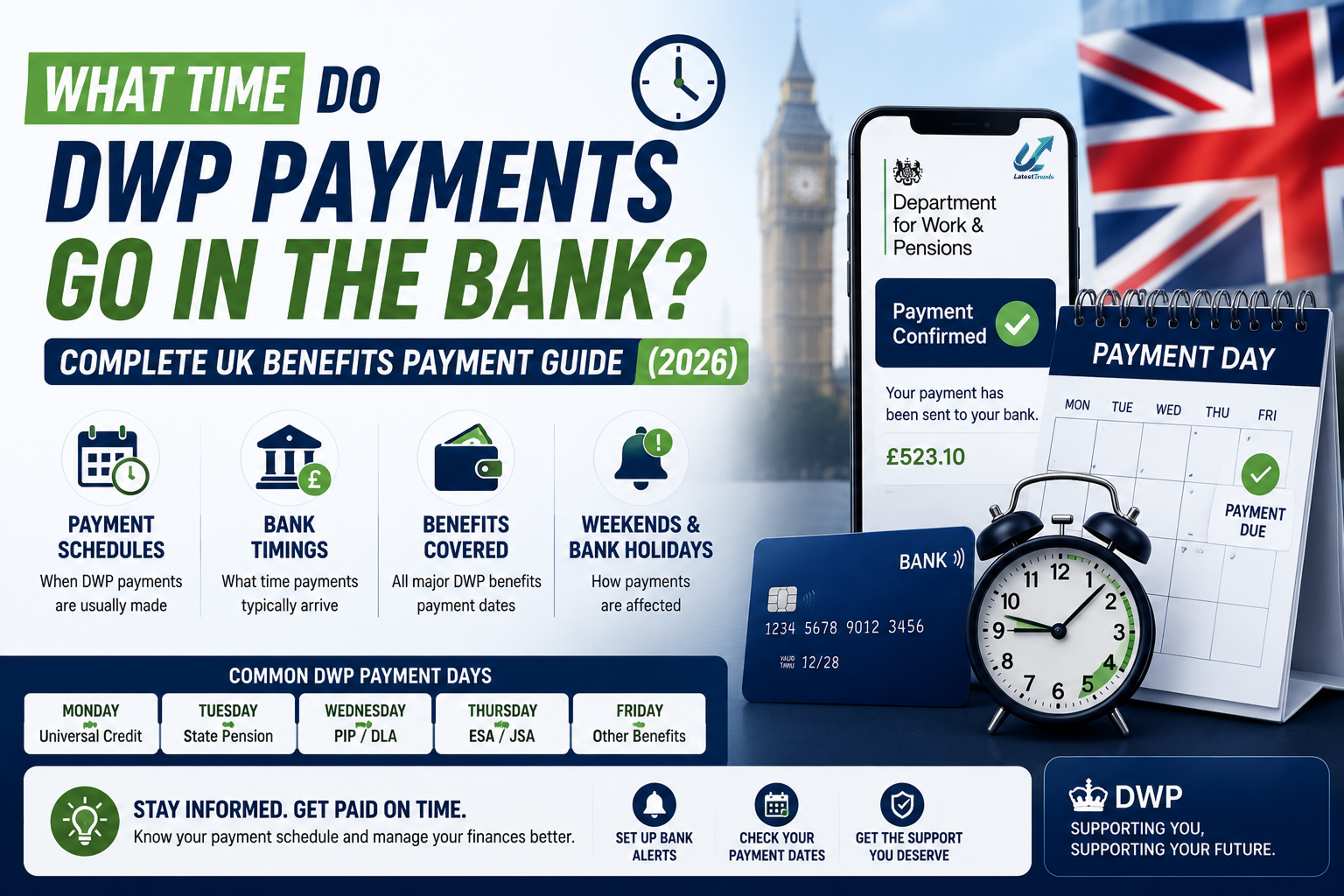
What Time Do DWP Payments Go into the Bank?
If you receive benefits from the UK’s Department for Work and Pensions (DWP), one of the most common questions is:
“What time do DWP payments go into my bank account?”
Whether you receive Universal Credit, Personal Independence Payment (PIP), State Pension, Employment and Support Allowance (ESA), Jobseeker’s Allowance (JSA), Carer’s Allowance, or another government benefit, knowing when your payment will arrive can help you plan your finances more effectively.
Although the DWP sends payments on your scheduled payment date, the exact time the money appears in your account depends mainly on your bank or building society rather than the DWP itself.
In this guide, we’ll explain how DWP payment times work, why different banks credit payments at different times, what to do if your payment is delayed, and answer the most frequently asked questions.
What Is the DWP?
The Department for Work and Pensions (DWP) is the UK government department responsible for administering many welfare benefits and pensions.
Some of the most common DWP payments include:
- Universal Credit
- State Pension
- Personal Independence Payment (PIP)
- Employment and Support Allowance (ESA)
- Jobseeker’s Allowance (JSA)
- Carer’s Allowance
- Attendance Allowance
- Pension Credit
- Disability Living Allowance (DLA)
Payments are usually made directly into your nominated bank, building society, or credit union account.
What Time Do DWP Payments Usually Arrive?
There is no official nationwide payment time set by the DWP.
Most people receive their payment sometime after midnight on the scheduled payment date, but the exact time depends on how quickly their bank processes incoming payments.
Many UK banks credit government payments in the early hours of the morning, while others may process them later during the business day.
Common arrival times reported by customers include:
- Shortly after midnight
- Between 1:00 AM and 3:00 AM
- Between 3:00 AM and 6:00 AM
- By 9:00 AM
- Occasionally later in the day
The timing varies between financial institutions and may occasionally differ from month to month.
Factors That Affect DWP Payment Times
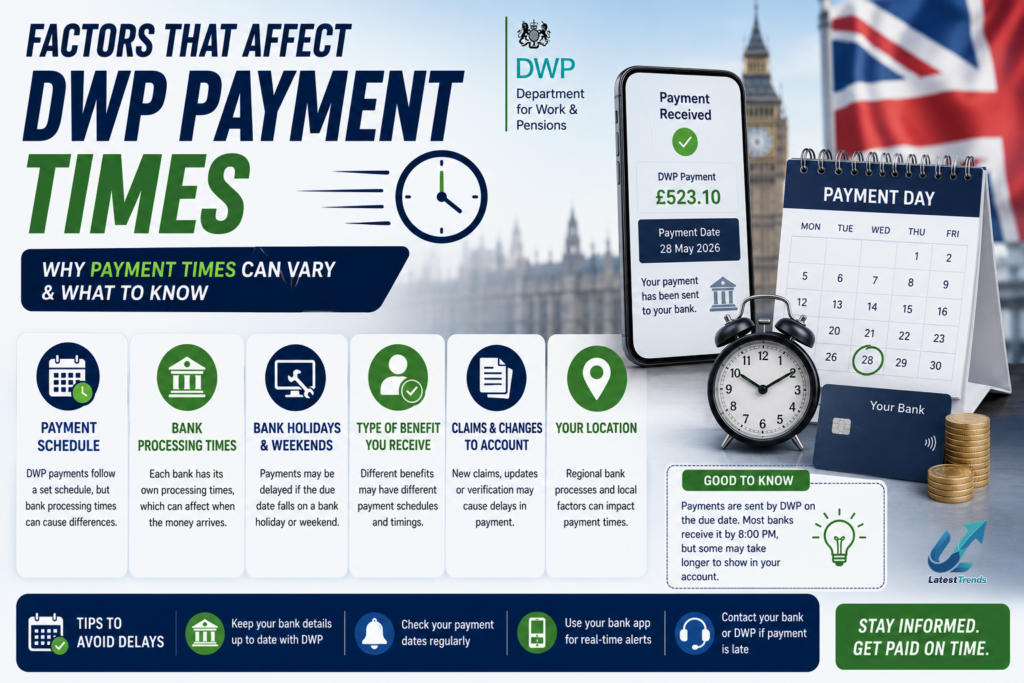
Several factors determine when your money appears.
1. Your Bank
Each bank has its own payment processing schedule.
Some banks release incoming payments shortly after midnight, while others process transactions later in the morning.
2. Weekends and Bank Holidays
If your normal payment date falls on:
- Saturday
- Sunday
- UK Bank Holiday
The DWP generally aims to pay you on the previous working day instead.
This helps ensure you receive your money before banks close for the holiday period.
3. Payment Processing Systems
Payments pass through banking systems before reaching your account.
Occasionally, system maintenance or technical issues can cause minor delays.
4. Account Changes
If you’ve recently updated:
- Bank account details
- Name
- Personal information
Additional verification may occasionally delay a payment.
Common DWP Benefits and Payment Frequency
Different benefits have different payment schedules.
Universal Credit
Usually paid once every month.
Personal Independence Payment (PIP)
Usually paid every four weeks.
State Pension
Normally paid every four weeks according to your payment schedule.
Employment and Support Allowance (ESA)
Payment frequency depends on your claim type and circumstances.
Carer’s Allowance
Often paid weekly in advance or every four weeks, depending on the payment option chosen.
Always refer to the payment schedule provided when your claim was approved.
What Should You Do If Your DWP Payment Is Late?
If your expected payment hasn’t arrived:
Check Your Bank Account
Ensure the payment hasn’t already been credited.
Some banks process payments later than others.
Confirm Your Payment Date
Review your online account, award letter, or recent correspondence to make sure you’re checking the correct payment date.
Consider Weekends and Bank Holidays
Payments due on non-working days are usually made earlier.
If today isn’t your scheduled payment date, your payment may already have been issued on the previous working day.
Verify Your Bank Details
Ensure your bank information is correct and hasn’t recently changed.
Contact the Relevant Benefit Office
If your payment still hasn’t arrived after allowing reasonable processing time, contact the office responsible for your benefit to confirm its status.
Have your National Insurance number and claim details available when you call.
Tips for Managing Your DWP Payments
Managing your benefit payments carefully can reduce financial stress.
Helpful habits include:
- Create a monthly budget.
- Set up Direct Debits after your payment date.
- Build an emergency savings fund if possible.
- Monitor your bank account regularly.
- Keep your personal details updated with the DWP.
- Save copies of important letters and payment notices.
Good financial planning helps you make the most of every payment.
Common Reasons for Payment Delays
Although most payments arrive on time, delays can happen because of:
- Incorrect bank account information
- Identity verification
- Changes to your claim
- Banking system maintenance
- Public holidays
- Fraud prevention checks
- Administrative processing
Most issues can be resolved by contacting the relevant department promptly.
Frequently Asked Questions (FAQs)
What time do DWP payments usually go into bank accounts?
There is no fixed national payment time. Many people receive their payment in the early hours of their scheduled payment day, but the exact timing depends on their bank or building society.
Are DWP payments made on weekends?
If your payment date falls on a weekend or UK bank holiday, payment is generally made on the previous working day.
Can different banks receive DWP payments at different times?
Yes. Every bank has its own payment processing schedule, so the arrival time may vary.
Why is my DWP payment late?
Possible reasons include bank processing delays, recent changes to your claim, incorrect account details, or additional verification checks.
Can I change the bank account for my DWP payments?
Yes. You can usually update your payment details by contacting the relevant DWP office or through the appropriate online service, depending on your benefit.
Helpful Tips for First-Time Claimants
If you’ve recently started receiving DWP benefits:
- Read your award letter carefully.
- Keep track of your expected payment dates.
- Notify the DWP promptly if your circumstances change.
- Check your online account regularly, where available.
- Keep important documents in a safe place for future reference.
Being organized can help avoid unnecessary delays or confusion.
Final Thoughts
Understanding when DWP payments reach your bank account can make managing your monthly finances much easier. While the DWP sends payments on your scheduled date, the exact arrival time is controlled by your bank’s processing system. Most people see their payment during the early hours of the payment day, although timings can vary.
If your payment appears later than expected, remain calm, check your payment schedule, consider weekends or bank holidays, and verify your account details before contacting the relevant benefit office. Staying informed and planning ahead will help you manage your finances with greater confidence.