

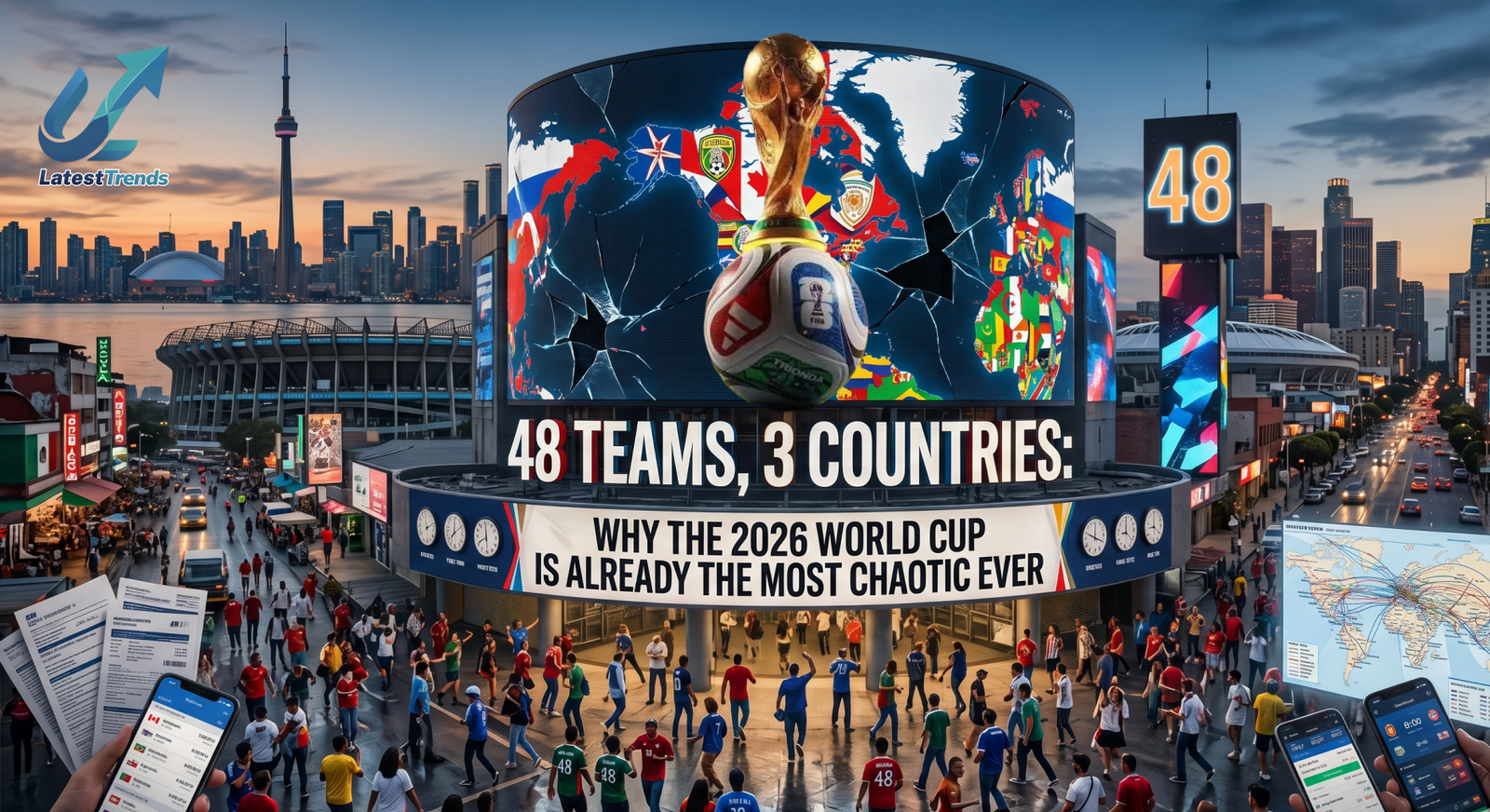
The FIFA World Cup has always been a beautiful kind of madness. It’s a month-long fever dream where grown adults cry over tactical substitutions, strangers become best friends in crowded bars, and the entire planet stops to watch a ball roll across a patch of grass. But what happens when you take that already volatile mix, inflate it by 50%, and scatter it across an entire continent?
You get the 2026 World Cup, an event that is shaping up to be the most gloriously chaotic sports spectacle ever conceived.
For decades, the tournament followed a strict, comfortingly predictable formula: 32 teams, one or two host countries, and a straightforward path to glory. In 2026, FIFA threw that playbook into a shredder. By expanding the tournament to 48 teams and splitting hosting duties across three countries—the United States, Mexico, and Canada—we are entering uncharted territory.
If you think you know what to expect from a World Cup, think again. Here is why the upcoming tournament is going to be pure, unadulterated chaos.
The Math Problem: 12 Groups and the “Best Third-Place” Lifeline
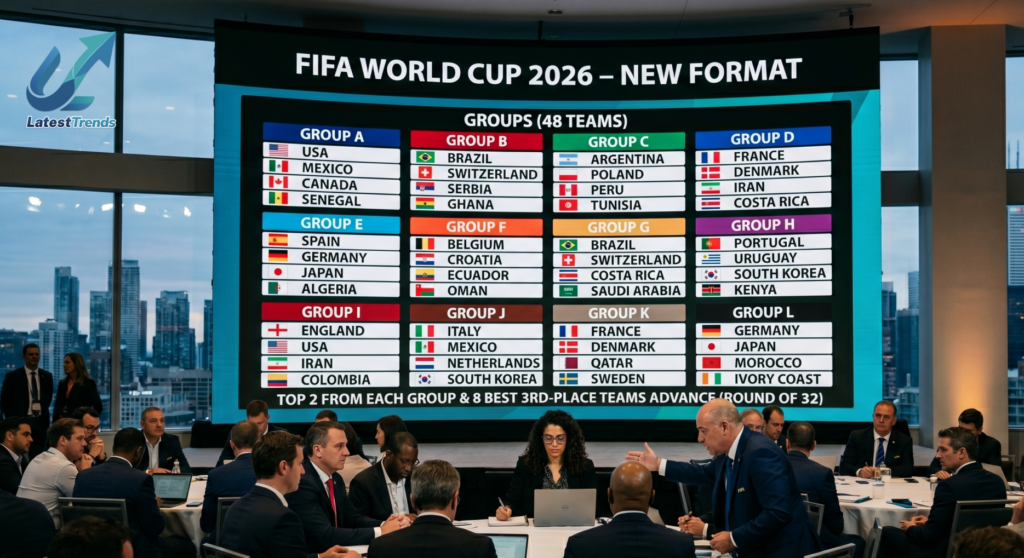
Let’s start with the actual structure on the pitch, because the next World Cup format changes are enough to make a data analyst break into a cold sweat.
Instead of the traditional eight groups of four, the 2026 iteration features 12 groups of four teams. Do the quick math: that yields 72 group-stage matches just to eliminate a mere 16 teams. The top two teams from each group will automatically advance, but they will be joined by the eight best third-placed teams.
“Gone are the days when finishing outside the top two automatically meant booking a flight home. Welcome to the era of the tournament lifeline.”
This creates a brand-new Round of 32 knockout phase, adding an extra layer of survival soccer. What does this mean for the actual games? Chaos. The final days of the group stage will no longer just be about who wins or loses their specific group; it will turn into a massive, multi-stadium calculator match. Teams will be desperately scoreboard-watching across three different time zones, trying to figure out if a 1-1 draw in Seattle is enough to edge out a team playing in Guadalajara on goal difference or fewer yellow cards. It’s going to be frantic, confusing, and utterly thrilling.
The Logistics Nightmare: A Continental Road Trip
If the tournament brackets sound dizzying, wait until you look at the map. Tri-nation World Cup logistics are completely redefining the phrase “away game.”
We aren’t just talking about crossing a border; we are talking about a tournament stretched across 5,000 miles. To put that into perspective, traveling from an opening match in Mexico City to a knockout game in Vancouver, and eventually to the final at MetLife Stadium in New Jersey, is a larger geographic footprint than traveling from London to Tehran.
Fans and players will have to deal with intense FIFA 2026 travel distances, shifting through four different time zones, drastically fluctuating climates, and varying high-altitude venues. A team could easily play a match in the sweltering humidity of Miami, fly five hours, and step onto the pitch in the brisk air of Seattle a few days later. Jet lag is no longer an excuse; it’s an active opponent.
The Fan Experience: Visas, Border Crossings, and Wallet Fatigue
For the die-hard supporters who love to follow their country’s journey live, the expanded 48-team World Cup format is going to be a severe test of endurance—and bank accounts.
Imagine being a fan whose team starts its campaign in the colorful, high-altitude atmosphere of Mexico City. If they finish second in their group, their next match might be in Toronto. Win that, and they are flying down to Atlanta.
Following a deep tournament run will require multiple international flights, navigating three distinct customs frameworks, dealing with varying currencies, and constantly adjusting to new local laws. The “festival of football” atmosphere will still be there, but it will be heavily fragmented. Instead of a single host nation turning into one massive city-wide party, the energy will be pulsed across 16 different host cities, making this a true continental road trip.
The Supply Chain and City Gridlock
It’s not just the fans and teams who will feel the pressure. The infrastructure of the host cities will be pushed to its absolute limits. From a local perspective, match days won’t just mean crowded stadiums—they will mean the controlled lockdown of major urban sectors.
In dense markets like New York/New Jersey, Philadelphia, and Boston, the sheer volume of people will create layered traffic congestion that spills deep into surrounding districts. In cities like Los Angeles, the entire freeway system will have to react to stadium surges all at once. Local delivery drivers, freight networks, and everyday commuters will find themselves trapped in a shifting web of security checkpoints and road closures. For 39 days, the host cities will have to operate on a flexible, completely unpredictable schedule.
Why We Will Love It Anyway: World Cup
Is it bloated? Probably. Is it a transparent commercial cash grab by FIFA to squeeze more broadcasting revenue out of 104 matches? Absolutely. Will the sheer physical toll on players spark a massive debate about squad rotation and performance fatigue? Without a doubt.
But despite the inevitable logistical headaches, the gridlock, and the dizzying bracket math, this tournament promises to be an unforgettable spectacle. The expansion opens the door for historic underdog stories, giving emerging football nations a genuine shot at the grandest stage of them all.
The 2026 World Cup is going to be loud, sprawling, exhausting, and completely unpredictable. It is a bold, chaotic step into the future of international sports—so buckle up, map out your travel routes, and prepare your nervous system. The beautiful game is about to get beautifully chaotic.
For an excellent breakdown of exactly how this massive structural shift operates on the pitch, check out this FIFA World Cup 2026 format explainer. This video provides a clear, visual walkthrough of how the 12 groups of four work and how the new 48-team knockout stage will play out.







2 Comments