
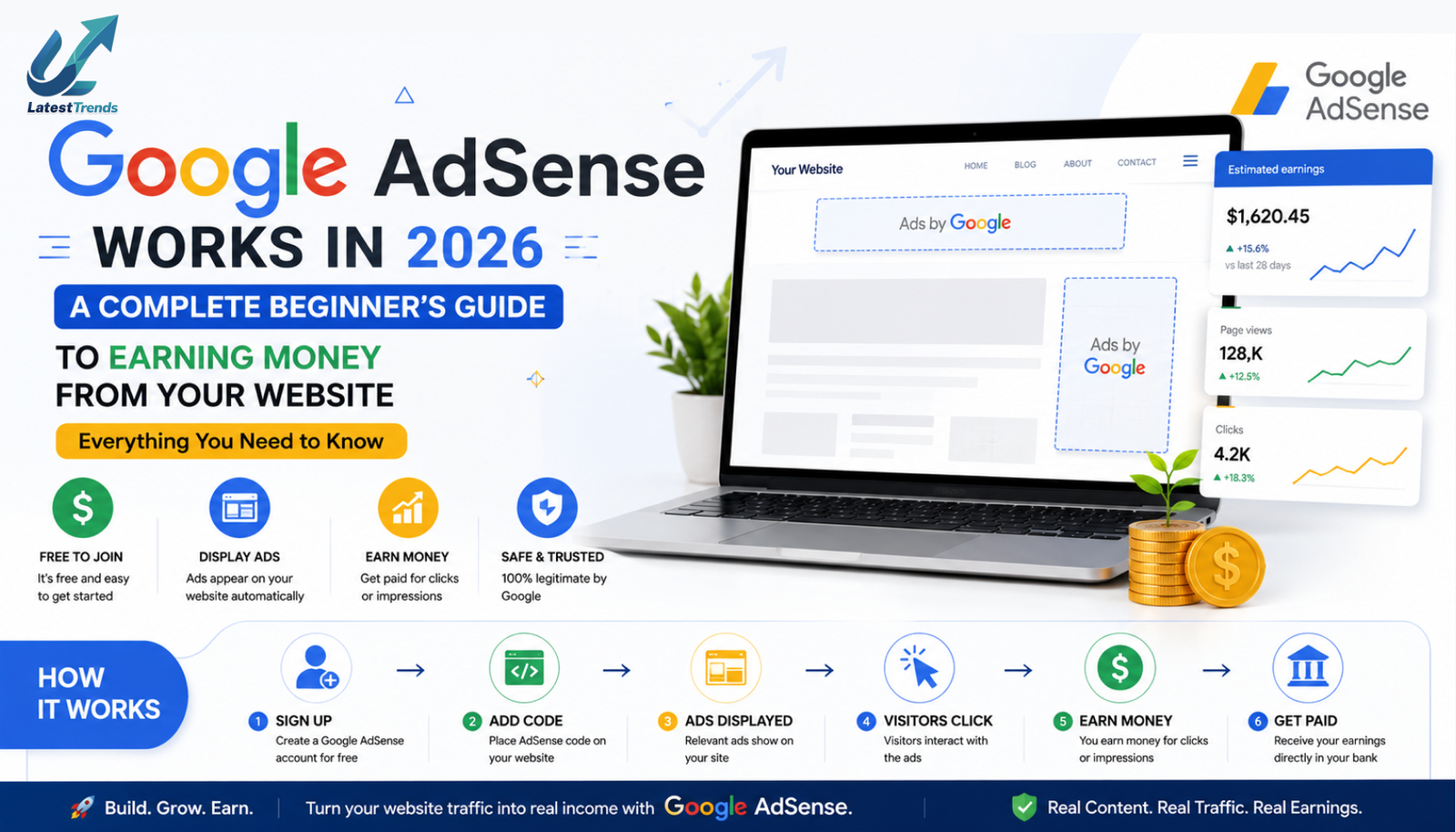
If you’ve ever visited a blog, news website, or tutorial site, you’ve probably noticed advertisements displayed between articles or in the sidebar. Many of those ads are powered by Google AdSense, one of the world’s most popular advertising programs for website publishers.
For bloggers and website owners, Google AdSense offers a straightforward way to monetize content by displaying relevant advertisements to visitors. You don’t need to contact advertisers individually or negotiate ad placements—Google handles the process automatically.
Whether you’re planning to launch your first blog or already have an established website, understanding how AdSense works is essential for building a sustainable online income.
In this guide, you’ll learn what Google AdSense is, how it operates, how publishers get paid, how to qualify for approval, common mistakes to avoid, and practical strategies to increase your earnings while staying compliant with Google’s policies.
What Is Google AdSense?Google AdSense approval tips
Google AdSense is an advertising program that enables website owners, bloggers, news publishers, and content creators to earn money by displaying advertisements on their websites.
Businesses use Google Ads to promote their products and services. Google then matches those advertisements with relevant websites in the AdSense network. When visitors view or interact with ads, publishers receive a share of the advertising revenue.
This automated system benefits all parties:
- Advertisers reach interested audiences.
- Visitors see ads that are generally relevant to the content they’re reading.
- Publishers earn revenue from their traffic.
How Does Google AdSense Work?
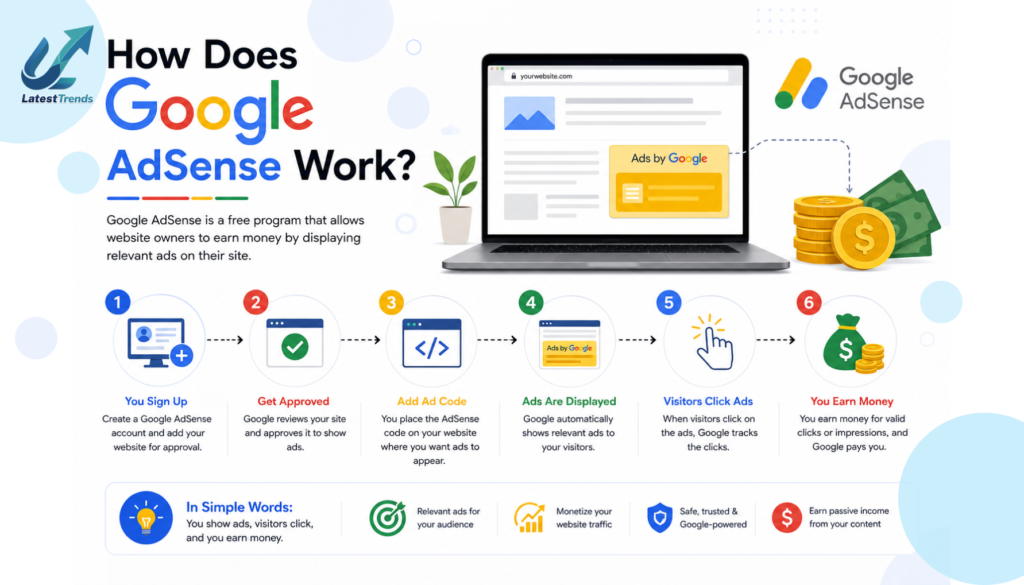
Understanding the process is easier when broken down into simple steps.
Step 1: A Publisher Creates Valuable Content
The journey starts with quality content. A website that provides useful, original, and informative articles attracts visitors through search engines, social media, and direct traffic.
Examples include:
- Technology blogs
- Travel guides
- Food recipes
- Educational websites
- Finance blogs
- Health resources
- Sports news
- Product review sites
High-quality content is the foundation of long-term AdSense success.
Step 2: The Website Applies for AdSense
After building a website with sufficient original content and essential pages, the publisher submits an application for Google AdSense.
Google reviews the site to ensure it meets program policies, including:
- Original content
- Easy navigation
- Good user experience
- Compliance with content guidelines
- Functional website design
Approval is not guaranteed, so preparing your site thoroughly before applying is important.
Step 3: Ad Code Is Added to the Website
Once approved, Google provides a small piece of code that the publisher adds to the website.
This code allows Google to:
- Understand the page content.
- Display relevant advertisements.
- Optimize ad placement.
- Measure impressions and clicks.
- Report earnings.
Many modern content management systems support simple AdSense integration through plugins or built-in settings.
Step 4: Advertisers Bid for Ad Space
Businesses competing to reach your audience participate in real-time auctions through Google Ads.
Factors that influence which ads appear include:
- Topic of the page
- User interests
- Device type
- Geographic location
- Advertiser demand
- Bid amount
- Ad quality
The highest-value combination generally wins the auction, helping maximize revenue for both advertisers and publishers.
Step 5: Visitors View or Click the Ads
When users browse your website, advertisements are displayed automatically.
Revenue depends on several factors, including:
- Number of visitors
- Page views
- Ad visibility
- Advertiser competition
- User location
- Content niche
- Device type
- Overall engagement
Not every visitor will click an advertisement, and that’s perfectly normal.
Step 6: Google Shares Revenue
Advertisers pay Google to display their ads. Google then shares a portion of that revenue with eligible publishers.
Your earnings accumulate in your AdSense account, and payments are issued once you meet the payment threshold and complete all required account verification steps.
How Do Bloggers Make Money with AdSense?
Most publishers earn through a combination of factors rather than relying on a single metric.
Revenue is influenced by:
- Organic search traffic
- High-quality content
- Time spent on the page
- Visitor location
- Advertiser demand
- Niche competition
- Seasonal trends
- User engagement
A website with helpful content and consistent traffic generally has better long-term earning potential than one focused solely on increasing page views.
Factors That Affect AdSense Earnings
No two websites earn the same amount. Your revenue depends on several variables:
1. Website Traffic
More qualified visitors generally create more opportunities for ad impressions and engagement.
2. Content Niche
Topics such as finance, insurance, business software, technology, education, and digital marketing often attract higher advertiser demand than broader entertainment topics.
3. Visitor Location
Traffic from countries with strong advertising markets may generate higher revenue than traffic from regions where advertiser competition is lower.
4. User Engagement
Readers who spend more time exploring your content and navigating multiple pages create additional opportunities for relevant ads to be displayed.
5. Website Speed
Fast-loading pages improve user experience and can increase engagement, which indirectly supports better monetization.
How to Get Google AdSense Approval
Before applying, make sure your website includes:
- Original, high-quality articles
- A professional design
- Mobile-friendly layout
- Clear navigation
- About page
- Contact page
- Privacy Policy
- Terms and Conditions (recommended)
- Disclaimer (if applicable)
Also, ensure your website is free from copied content and complies with Google’s program policies.
Best Practices to Increase AdSense Revenue
Growing AdSense income requires patience and consistent improvement.
Here are some effective strategies:
- Publish comprehensive, helpful content.
- Target keywords with clear search intent.
- Improve page loading speed.
- Create content clusters around your niche.
- Keep readers engaged with internal links.
- Update older articles regularly.
- Optimize for mobile devices.
- Improve user experience.
- Build trust with transparent policies.
- Diversify traffic sources through SEO, email newsletters, and social media.
Remember that sustainable growth comes from providing value to readers rather than trying to maximize ad exposure.
Common AdSense Mistakes to Avoid
Many beginners lose approval or reduce their earning potential by making avoidable mistakes.
Avoid:
- Clicking your own ads.
- Asking friends or family to click ads.
- Publishing copied or spun content.
- Using misleading layouts that encourage accidental clicks.
- Covering pages with excessive advertising.
- Ignoring website performance.
- Violating copyright rules.
- Neglecting policy updates.
Following Google’s guidelines helps protect your account over the long term.
Advantages of Google AdSense
- Easy to implement
- Free to join
- Automatic ad matching
- Global advertiser network
- Supports multiple ad formats
- Suitable for blogs, news sites, and niche websites
- Reliable payment system
- Works alongside quality SEO strategies
Challenges of Google AdSense
While AdSense is an excellent monetization option, it’s important to understand its limitations:
- Approval may take time.
- Revenue depends on traffic quality.
- Policy violations can affect your account.
- Income may fluctuate due to seasonality.
- Highly competitive niches require ongoing content investment.
Viewing AdSense as a long-term monetization strategy rather than a quick-income solution leads to more realistic expectations.
Can You Earn a Full-Time Income with AdSense?
Yes, some publishers generate a full-time income through AdSense, but success typically comes from building a large library of original content, attracting consistent organic traffic, and continually improving user experience.
Many successful websites also combine AdSense with other revenue streams such as affiliate marketing, sponsored content, digital products, newsletters, and online courses to create a more stable business.
Frequently Asked Questions (FAQs)
Is Google AdSense free to join?
Yes. There is no fee to apply for or use Google AdSense.
How long does AdSense approval take?
Approval times vary depending on your website and the review process. Ensure your site is complete and follows all program policies before applying.
Can beginners use AdSense?
Absolutely. Many new bloggers begin monetizing with AdSense after creating valuable, original content and building a policy-compliant website.
Does more traffic always mean more revenue?
Higher traffic can increase earning opportunities, but factors such as visitor quality, niche, engagement, and advertiser demand also play major roles.
Can I use AdSense with affiliate marketing?
Yes. Many publishers combine AdSense with affiliate marketing, provided their websites comply with Google’s policies and maintain a positive user experience.
Final Thoughts
Google AdSense remains one of the most accessible ways for bloggers and website owners to monetize high-quality content. Its automated system allows publishers to focus on creating valuable articles while Google handles ad matching and delivery.
The key to long-term success is not chasing shortcuts but building a trustworthy website that genuinely helps readers. By publishing original content, improving SEO, maintaining a fast and user-friendly site, and following AdSense policies, you can create a reliable foundation for sustainable online earnings.
Treat your blog as a long-term digital asset, continue learning about search engine optimization and audience engagement, and remember that consistent effort often delivers the best results over time.