

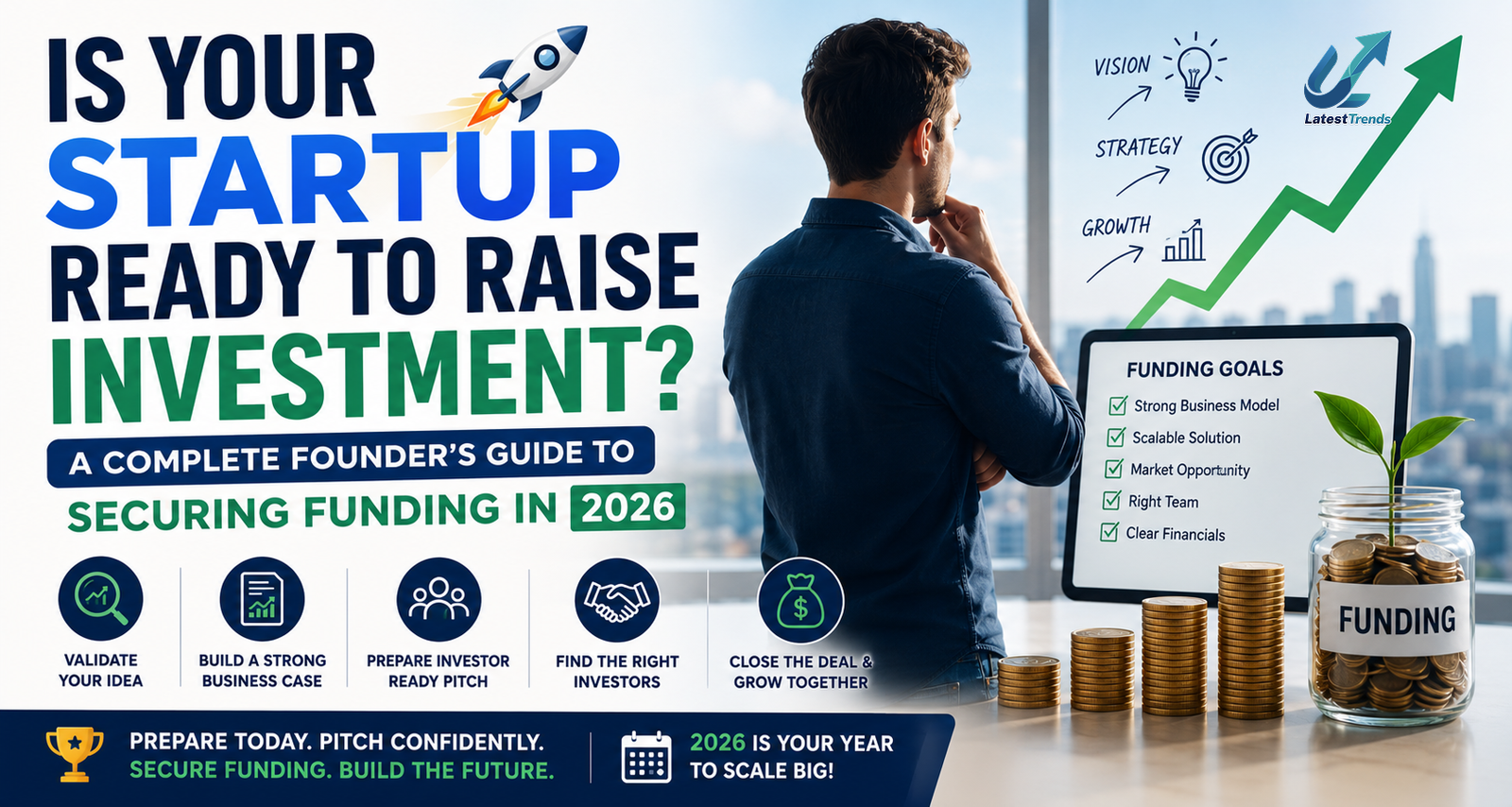
Is Your Startup Ready to Raise Investment?
Every entrepreneur dreams of seeing their startup grow into the next big success story. But before approaching angel investors, venture capitalists, or startup accelerators, one important question must be answered:
Is your startup truly ready to raise investment?
Many founders believe that securing funding is the first milestone of success. In reality, investment is not the starting point—it is fuel for a business that has already shown promising potential.
Investors are not simply funding ideas. They invest in businesses that demonstrate strong execution, market demand, capable leadership, and a clear path to growth. If your startup is not prepared, raising capital can become difficult, time-consuming, and even harmful if the wrong investment terms are accepted.
In this comprehensive guide, we’ll help you evaluate whether your startup is investment-ready, understand what investors expect, and learn how to maximize your chances of securing funding in 2026.
Why Investment Readiness Matters
Raising investment is about more than receiving money. It often means bringing experienced partners into your business who expect measurable growth and accountability.
Being investment-ready helps you:
- Raise capital faster
- Negotiate better valuation
- Attract quality investors
- Build investor confidence
- Scale operations efficiently
- Reduce fundraising stress
Preparation significantly improves your chances of closing a successful funding round.
What Investors Really Look For
Before writing a cheque, investors evaluate multiple aspects of your startup.
Key factors include:
- A genuine market problem
- Innovative and scalable solution
- Product-market fit
- Strong founding team
- Business traction
- Revenue growth
- Large target market
- Sustainable competitive advantage
- Financial discipline
- Long-term vision
A startup that performs well across these areas stands out in a competitive funding environment.
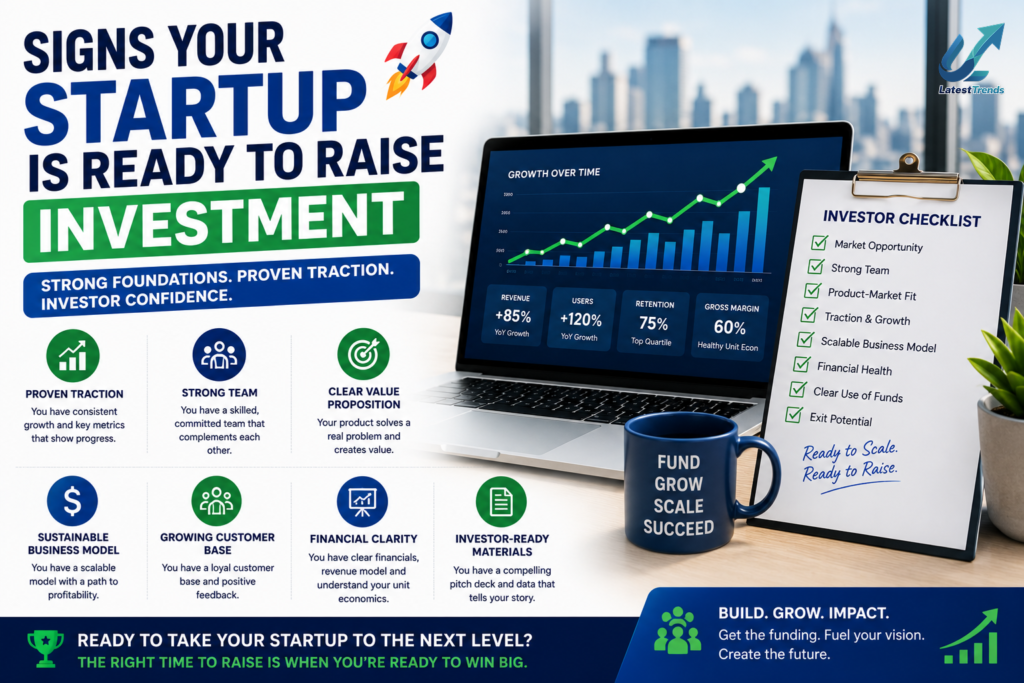
Signs Your Startup Is Ready to Raise Investment
1. You’ve Validated Your Business Idea
One of the biggest mistakes founders make is seeking investment before validating their concept.
Ask yourself:
- Have customers used the product?
- Are they willing to pay?
- Is there consistent demand?
- Have you collected positive feedback?
A validated idea significantly reduces investor risk.
2. You Have Product-Market Fit
Product-market fit occurs when customers genuinely need your product and continue using it.
Indicators include:
- Increasing user retention
- Repeat customers
- Organic referrals
- Growing revenue
- Positive reviews
Investors often see product-market fit as one of the strongest signals of future growth.
3. Your Startup Shows Traction
Traction demonstrates that your business is moving in the right direction.
Examples include:
- Monthly revenue growth
- Rising customer numbers
- App downloads
- Active users
- Subscription renewals
- Strategic partnerships
- Pilot projects with enterprises
Even modest traction can be compelling if growth is consistent.
4. You Understand Your Market
Investors expect founders to know their industry inside and out.
You should be able to explain:
- Total Addressable Market (TAM)
- Serviceable Addressable Market (SAM)
- Serviceable Obtainable Market (SOM)
- Industry trends
- Customer behavior
- Competitor positioning
Strong market knowledge builds confidence.
5. Your Financials Are Organized
Professional financial management signals operational maturity.
Prepare:
- Profit & Loss Statement
- Cash Flow Statement
- Balance Sheet
- Revenue Forecast
- Expense Breakdown
- Burn Rate
- Runway Calculation
- Customer Acquisition Cost (CAC)
- Customer Lifetime Value (LTV)
Investors appreciate founders who understand their numbers.
6. You Have a Scalable Business Model
Investors look for businesses capable of growing without costs increasing at the same rate.
Examples include:
- SaaS
- Online marketplaces
- AI platforms
- Mobile apps
- Digital subscriptions
- Cloud software
- Enterprise solutions
Scalability increases long-term return potential.
7. Your Team Is Strong
A great team often matters more than a perfect product.
Successful founding teams typically combine expertise in:
- Technology
- Sales
- Marketing
- Product development
- Operations
- Finance
A balanced team reassures investors that the business can execute effectively.
Startup Investment Stages Explained
Understanding funding stages helps you approach the right investors.
Bootstrapping
Using personal savings or early revenue to build the business while maintaining full ownership.
Friends and Family Round
Early capital from trusted supporters, often used to build an MVP or validate the concept.
Angel Investment
Angel investors provide funding in exchange for equity and often bring valuable industry experience and mentorship.
Seed Funding
Used to accelerate product development, marketing, hiring, and customer acquisition after early validation.
Series A
Focused on scaling operations, improving infrastructure, and expanding into new markets.
Series B and Beyond
Supports rapid growth, international expansion, acquisitions, and larger operational investments.
Essential Documents Before Meeting Investors
Professional preparation increases credibility.
Prepare these documents:
- Investor Pitch Deck
- Executive Summary
- Business Plan
- Financial Model
- Cap Table
- Product Roadmap
- Customer Testimonials
- Market Research
- Revenue Reports
- Legal Documents
- Intellectual Property Details
- Due Diligence Folder
Well-organized documentation speeds up fundraising discussions.
Common Reasons Investors Say No
Even promising startups receive rejections.
Common reasons include:
- No clear market need
- Weak product-market fit
- Unrealistic valuation
- Poor financial planning
- Limited customer traction
- Weak founding team
- No competitive advantage
- Inconsistent business strategy
- Unclear revenue model
- Poor presentation skills
Learning from investor feedback can strengthen future fundraising efforts.
Questions Every Founder Should Ask Before Raising Investment
Before approaching investors, reflect on these questions:
- Why do I need funding now?
- How much capital is required?
- How long will the funds last?
- What milestones will this funding achieve?
- What equity am I willing to offer?
- Can my startup grow without external investment?
- Am I prepared for investor reporting and governance?
Clear answers demonstrate strategic thinking.
How to Increase Your Chances of Getting Funded
Successful founders often follow these best practices:
- Build a working product before fundraising.
- Focus on customer satisfaction and retention.
- Track meaningful business metrics.
- Practice your investor pitch.
- Research investors who align with your industry.
- Network through startup events and accelerator programs.
- Show realistic financial projections.
- Highlight your competitive advantage with evidence.
- Be transparent about risks and how you plan to manage them.
Fundraising is as much about trust as it is about numbers.
Startup Funding Trends in 2026
The investment landscape continues to evolve.
Sectors attracting significant investor interest include:
- Artificial Intelligence (AI)
- FinTech
- HealthTech
- ClimateTech
- Cybersecurity
- EdTech
- SaaS Platforms
- Creator Economy
- Logistics Technology
- DeepTech
- Robotics
- Clean Energy
Startups solving real-world problems in these areas often receive increased attention, but investors still prioritize strong execution over trends.
Investment Readiness Checklist
Use this quick checklist before beginning your fundraising journey.
- Product validated by real customers
- Clear product-market fit
- Growing customer base
- Scalable business model
- Organized financial statements
- Strong founding team
- Professional pitch deck
- Defined fundraising goals
- Realistic valuation
- Legal compliance completed
The more boxes you can confidently check, the stronger your investment case becomes.
Frequently Asked Questions (FAQs)
When should a startup raise investment?
The ideal time is after validating your idea, demonstrating traction, and identifying a clear plan for using the capital to achieve measurable growth.
Do all startups need investors?
No. Many businesses grow successfully through bootstrapping, customer revenue, or strategic partnerships. External investment is most useful when it accelerates growth beyond what internal resources can support.
How much equity should founders give away?
There is no fixed percentage. It depends on valuation, funding stage, capital required, and long-term ownership goals. Founders should avoid unnecessary dilution while ensuring the business has enough resources to grow.
What is the biggest mistake during fundraising?
Approaching investors too early without sufficient validation, traction, or a clear financial strategy. Preparation often makes the difference between rejection and success.
Can first-time founders raise investment?
Yes. Investors regularly back first-time founders who demonstrate strong execution, deep market understanding, and the ability to learn quickly.
Final Thoughts
Raising investment is a major milestone, but it should never be viewed as the finish line. The strongest startups earn investor confidence by solving real customer problems, building products people love, managing finances responsibly, and demonstrating consistent progress.
Before beginning your fundraising journey, take time to assess your startup honestly. Strengthen weak areas, gather evidence of traction, prepare professional documents, and refine your vision. Investment is most valuable when your business is ready to use it effectively—not simply because capital is available.
Founders who focus on creating long-term value rather than chasing funding are often the ones who attract the right investors and build enduring companies.





4 Comments