

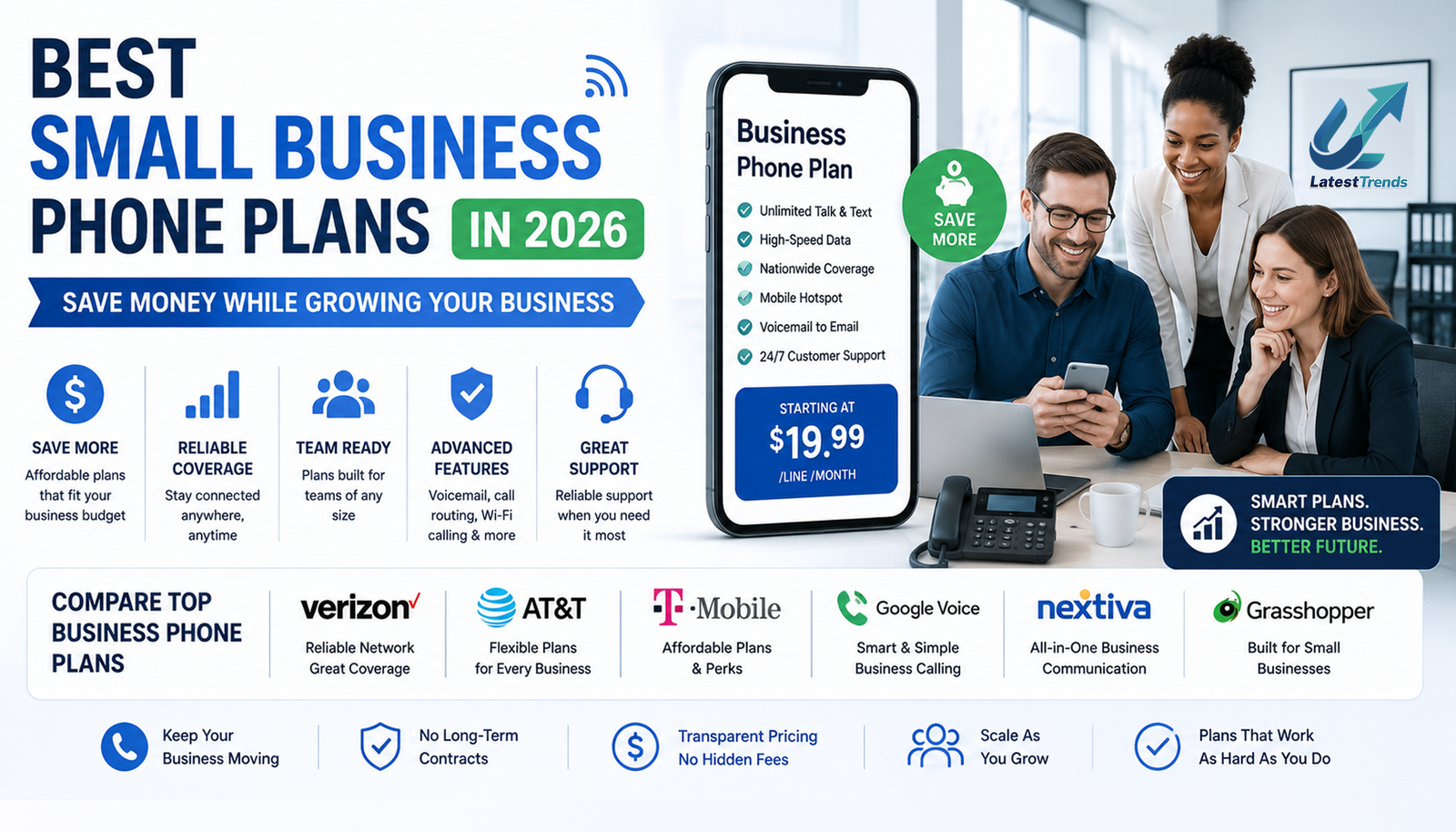
Running a small business means making smart decisions with every dollar you spend. One of the most important investments is choosing the right small business phone plans. Whether you operate a local shop, a startup, an online business, or a remote team, reliable communication is essential for customer satisfaction and business growth.
Modern business phone systems offer much more than basic calling. Features like virtual phone numbers, auto attendants, voicemail-to-email, video meetings, team messaging, CRM integration, and mobile apps help businesses stay connected from anywhere.
This comprehensive guide explains everything you need to know about choosing the best small business phone plan while helping you compare features, costs, and providers.
What Is a Small Business Phone Plan?
A small business phone plan is a communication service specifically designed for businesses instead of personal use. These plans usually include professional calling features, business phone numbers, call management tools, and collaboration features.
Unlike traditional landlines, today’s business phone services are mostly cloud-based, allowing employees to make and receive calls using smartphones, laptops, tablets, or desk phones through an internet connection.
This flexibility makes business communication more affordable, scalable, and easier to manage.
Why Every Small Business Needs a Dedicated Phone Plan
Many entrepreneurs begin by using their personal mobile number for business. While this may work initially, it quickly creates challenges as the business grows.
A dedicated business phone plan provides:
- Professional business identity
- Better customer experience
- Separate personal and business calls
- Team collaboration
- Call forwarding
- Business voicemail
- Auto receptionist
- Call recording
- Analytics and reporting
- Improved customer trust
Having a dedicated business number also makes your company appear more established and credible.
Types of Small Business Phone Plans
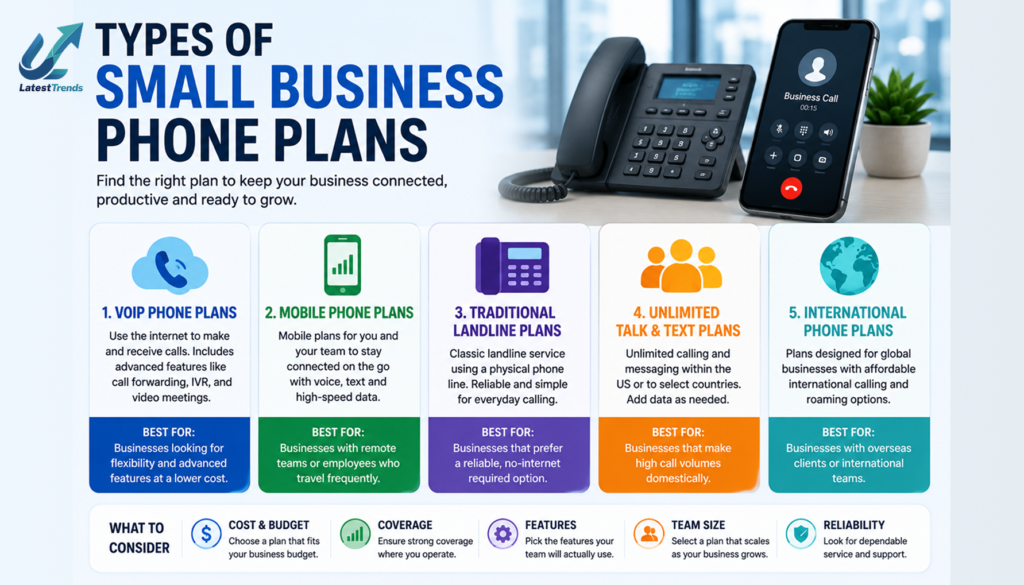
1. VoIP Business Phone Plans
Voice over Internet Protocol (VoIP) allows businesses to make calls using the internet instead of traditional telephone lines.
Benefits include:
- Lower monthly costs
- HD voice quality
- Unlimited calling options
- International calling
- Mobile applications
- Remote work support
VoIP has become the preferred option for startups and growing companies.
2. Cloud-Based Phone Systems
Cloud phone systems eliminate the need for expensive on-site hardware.
Advantages include:
- Easy setup
- Automatic updates
- Flexible scaling
- Secure cloud storage
- Advanced business features
- Multi-location support
Cloud solutions are ideal for businesses with remote or hybrid teams.
3. Traditional Landline Plans
Some businesses still prefer landline services because of their reliability.
These plans are suitable for:
- Medical clinics
- Retail stores
- Government offices
- Manufacturing businesses
However, they generally offer fewer modern collaboration features compared to cloud systems.
4. Mobile Business Phone Plans
Businesses with employees who travel frequently often choose mobile business plans.
These plans typically include:
- Unlimited talk
- High-speed data
- International roaming
- Business hotspot
- Device management
- Shared employee plans
Essential Features to Look For
Not every business needs the same features. Before selecting a provider, consider these capabilities:
Auto Attendant
Automatically answers incoming calls and directs customers to the correct department.
Call Forwarding
Ensures calls reach employees wherever they are working.
Voicemail to Email
Receive voicemail messages directly in your email inbox.
Video Conferencing
Useful for virtual meetings with clients and remote employees.
Team Messaging
Allows employees to collaborate instantly.
Call Recording
Helpful for training, compliance, and quality assurance.
CRM Integration
Connects your phone system with customer relationship management software for improved productivity.
Analytics Dashboard
Track call volume, missed calls, customer wait times, and employee performance.
Benefits of Cloud Business Phone Systems
Cloud-based business communication has transformed how companies operate.
Major benefits include:
- Lower infrastructure costs
- Faster deployment
- Easy employee onboarding
- Improved customer service
- Better reliability
- Automatic backups
- Business continuity during outages
- Secure communication
How Much Do Small Business Phone Plans Cost?
Pricing depends on several factors:
- Number of users
- Included features
- Domestic calling
- International calling
- Video conferencing
- AI features
- Call recording
- CRM integrations
Many providers offer monthly subscription plans that can scale as your business grows, making them more cost-effective than maintaining traditional phone systems.
Best Small Business Phone Plans for Different Business Types
Startups
Startups benefit from affordable cloud phone systems that include basic calling, voicemail, mobile apps, and unlimited domestic calls.
Freelancers
Freelancers often need a virtual business number, call forwarding, and voicemail without paying for enterprise-level features.
Retail Businesses
Retail stores require reliable customer support, call routing, and business hours management.
Remote Teams
Companies with distributed employees benefit from cloud-based collaboration tools, video meetings, and mobile accessibility.
Customer Support Teams
Businesses handling high call volumes need advanced routing, call queues, analytics, and call recording.
How to Choose the Right Business Phone Plan
Before purchasing a plan, ask yourself:
- How many employees need phone access?
- Do you have remote workers?
- Will you make international calls?
- Do you require CRM integration?
- Do you need video conferencing?
- Is call recording important?
- What’s your monthly budget?
- Will your business grow over the next few years?
Answering these questions will help you select a plan that meets both current and future needs.
Common Mistakes to Avoid
Many small businesses make avoidable mistakes when choosing a phone service.
Avoid:
- Selecting the cheapest plan without checking features
- Ignoring customer support quality
- Overlooking scalability
- Paying for unnecessary features
- Not checking the internet requirements for VoIP
- Failing to compare multiple providers
- Ignoring security and uptime guarantees
A careful comparison can save money and prevent future disruptions.
Future Trends in Business Phone Systems
Business communication continues to evolve rapidly.
Emerging trends include:
- AI-powered virtual receptionists
- Automated call summaries
- Voice analytics
- Smart spam detection
- Integrated customer communication platforms
- Advanced business texting
- Unified communication systems
- AI meeting assistants
- Intelligent call routing
Businesses adopting these technologies can improve efficiency while delivering better customer experiences.
Frequently Asked Questions
Are VoIP phone plans better than traditional landlines?
For most small businesses, VoIP offers greater flexibility, lower costs, and more advanced features than traditional landlines.
Can I keep my existing business phone number?
Yes. Most providers support number porting, allowing you to transfer your existing business number.
Do business phone plans work on mobile devices?
Yes. Most cloud phone services include mobile apps for Android and iPhone, allowing employees to make business calls from anywhere.
Is the internet required for VoIP?
Yes. A stable internet connection is necessary for VoIP services to deliver high-quality voice calls.
Which businesses benefit most from cloud phone systems?
Startups, freelancers, online businesses, customer support teams, agencies, and companies with remote employees benefit the most.
Final Thoughts
Choosing the right small business phone plan is more than selecting a calling service—it’s about building a reliable communication foundation for your company. The ideal solution should balance affordability, flexibility, security, and scalability while supporting excellent customer service.
Before making a decision, compare pricing, features, customer support, uptime, and integration options. Investing in the right business phone system today can improve productivity, strengthen customer relationships, and help your business grow confidently in the years ahead.







One Comment