
How Can You Scale Your Business Without Losing Quality?
Growing a business is every entrepreneur’s dream. More customers, higher revenue, stronger brand recognition, and expanding into new markets are signs of success. However, rapid growth comes with a hidden challenge—maintaining the same level of quality that helped your business succeed in the first place.
Many companies struggle when they scale too quickly. Customer service declines, product quality drops, employees become overwhelmed, and operational inefficiencies begin to appear. As a result, businesses may gain more customers but lose the trust and loyalty that drive long-term success.
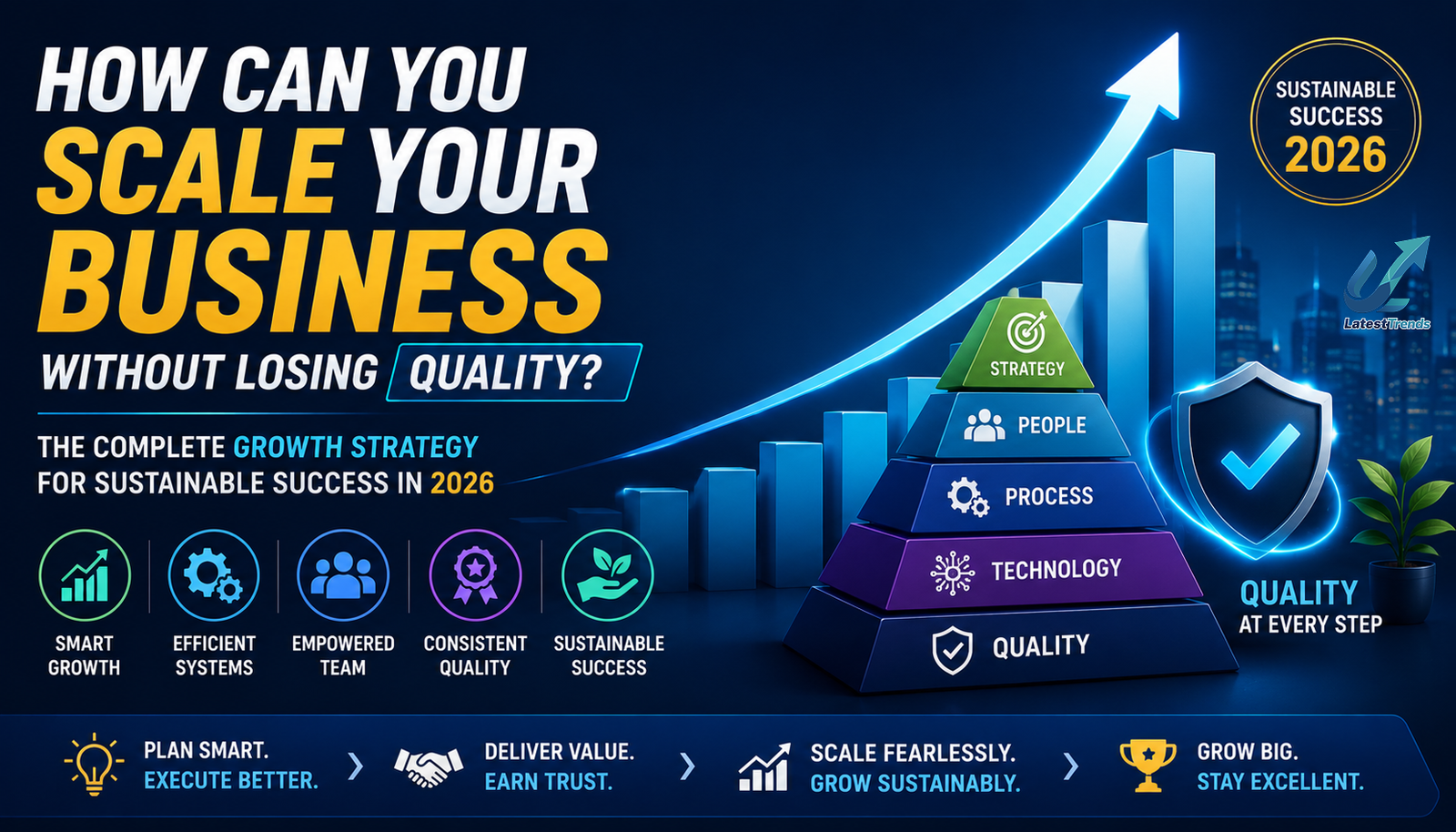
The good news is that scaling doesn’t have to come at the expense of quality. By building strong systems, investing in the right people, embracing technology, and staying customer-focused, your business can grow sustainably while maintaining excellence.
In this guide, you’ll learn practical strategies to scale your business without sacrificing quality, along with common mistakes to avoid and expert tips for long-term growth.
What Does Scaling a Business Mean?
Scaling a business means increasing revenue, customers, and market reach while keeping costs and resources under control. Unlike simple business growth, scaling focuses on creating systems that allow the company to handle increased demand efficiently.
A scalable business can:
- Serve more customers
- Increase revenue consistently
- Improve profitability
- Expand into new markets
- Maintain high-quality products and services
- Operate efficiently with repeatable processes
Successful scaling is about working smarter—not just harder.
Why Quality Matters During Business Growth
Quality is one of the biggest reasons customers choose your business over competitors. It builds trust, strengthens your reputation, and encourages repeat purchases.
When quality declines, businesses often experience:
- Negative customer reviews
- Higher refund requests
- Reduced customer loyalty
- Increased employee stress
- Lower brand credibility
- Declining sales over time
Protecting quality while growing is one of the smartest long-term investments any business can make.
Signs Your Business Is Ready to Scale
Before expanding, ask yourself these questions:
- Is your business consistently profitable?
- Do you have repeat customers?
- Are your operations well-documented?
- Can your team handle increased demand?
- Do you have reliable suppliers or partners?
- Is customer satisfaction consistently high?
- Do you have enough cash flow to support growth?
If you answered “yes” to most of these questions, your business is likely ready for its next stage of growth.
10 Proven Ways to Scale Your Business Without Losing Quality
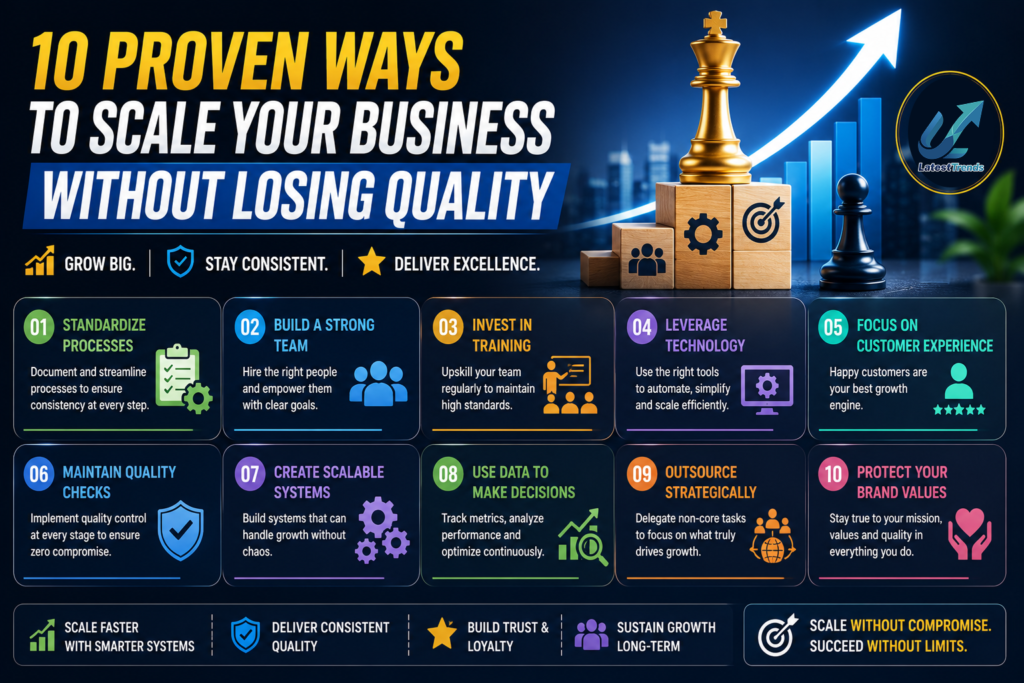
1. Build Standard Operating Procedures (SOPs)
One of the biggest reasons quality declines is inconsistent processes.
Document every important task, including:
- Customer support
- Product delivery
- Sales process
- Marketing campaigns
- Inventory management
- Employee onboarding
Clear procedures ensure every team member follows the same high standards.
2. Invest in the Right People
Your employees represent your brand.
Hire individuals who align with your company values and invest in continuous training.
Successful businesses focus on:
- Skills development
- Leadership training
- Clear communication
- Performance reviews
- Employee recognition
A motivated team consistently delivers better customer experiences.
3. Automate Repetitive Tasks
Automation reduces errors and allows employees to focus on high-value work.
Consider automating:
- Email marketing
- Customer relationship management (CRM)
- Invoice generation
- Inventory tracking
- Appointment scheduling
- Social media posting
- Payroll processing
Automation improves efficiency without reducing quality.
4. Focus on Customer Experience
Scaling should never reduce customer satisfaction.
Continue to:
- Respond quickly to inquiries
- Personalize customer interactions
- Collect feedback regularly
- Resolve complaints promptly
- Offer consistent after-sales support
Happy customers become loyal advocates for your brand.
5. Use Data to Make Decisions
Growing businesses rely on data—not assumptions.
Track important metrics such as:
- Customer Acquisition Cost (CAC)
- Customer Lifetime Value (CLV)
- Net Promoter Score (NPS)
- Revenue Growth
- Conversion Rate
- Customer Retention Rate
- Employee Productivity
Regular analysis helps identify problems before they affect quality.
6. Scale Gradually
One common mistake is expanding too quickly.
Instead of opening multiple locations or launching several products at once:
- Test one market first
- Measure results
- Improve processes
- Expand step by step
Controlled growth reduces operational risk.
7. Strengthen Quality Control
Create quality assurance systems that monitor products and services throughout every stage.
Examples include:
- Product inspections
- Service audits
- Customer satisfaction surveys
- Internal performance reviews
- Compliance checklists
Quality should be measured continuously—not only when problems arise.
8. Build a Strong Company Culture
Company culture directly influences quality.
Encourage values such as:
- Accountability
- Innovation
- Customer-first thinking
- Team collaboration
- Continuous improvement
Employees who feel connected to your mission are more likely to maintain high standards.
9. Diversify Revenue Streams Carefully
Expanding your income sources can reduce financial risk, but avoid launching too many offerings at once.
Possible opportunities include:
- Subscription services
- Digital products
- Premium memberships
- Consulting
- Online courses
- Affiliate partnerships
Choose opportunities that complement your core business and maintain consistent quality.
10. Continuously Improve
Successful businesses never stop learning.
Regularly:
- Analyze customer feedback
- Monitor competitors
- Improve products
- Upgrade technology
- Train employees
- Review business strategies
Continuous improvement keeps your business competitive as it grows.
Common Mistakes Businesses Make While Scaling
Avoid these common pitfalls:
- Hiring too quickly
- Ignoring customer feedback
- Expanding without sufficient cash flow
- Lack of employee training
- Poor communication
- Weak leadership
- No documented processes
- Overpromising to customers
- Neglecting quality assurance
- Chasing growth instead of sustainable value
Recognizing these risks early can save your business significant time and money.
Technology That Helps Businesses Scale
Modern technology simplifies growth while maintaining consistency.
Useful tools include:
- CRM software
- Project management platforms
- Accounting software
- Cloud storage
- AI-powered customer support
- Marketing automation tools
- Inventory management systems
- Business analytics dashboards
Choosing the right technology can improve productivity without compromising quality.
Leadership’s Role in Business Scale
As your business grows, leadership becomes even more important.
Strong leaders:
- Communicate a clear vision
- Empower employees
- Delegate effectively
- Make data-driven decisions
- Encourage innovation
- Maintain company values
- Focus on long-term sustainability
Great leadership creates an environment where quality and growth can coexist.
Business Scaling Trends in 2026
Businesses are increasingly adopting modern strategies such as:
- Artificial Intelligence (AI) automation
- Remote and hybrid work models
- Customer experience optimization
- Subscription-based business models
- Predictive analytics
- Sustainable business practices
- Cloud-based operations
- Low-code and no-code software
- Personalization using AI
- Digital transformation
Companies that embrace these trends thoughtfully often scale more efficiently while preserving customer satisfaction.
Business Scaling Checklist
Before expanding, ensure your business has:
- Consistent profitability
- Standard operating procedures (SOPs)
- Reliable team members
- Strong cash flow
- Customer satisfaction tracking
- Automation where appropriate
- Scalable technology
- Quality control processes
- Leadership development
- Long-term growth strategy
Frequently Asked Questions (FAQs)
What is the difference between growth and scaling?
Growth typically requires proportional increases in resources, while scaling focuses on increasing revenue more efficiently by improving systems, technology, and operational processes.
Why do businesses lose quality while scaling?
Quality often declines due to poor planning, rapid hiring, weak processes, inadequate training, or insufficient quality control systems.
Can small businesses scale successfully?
Absolutely. Small businesses can scale by building efficient systems, leveraging technology, maintaining financial discipline, and staying focused on customer satisfaction.
How important is automation during scaling?
Automation helps reduce repetitive work, improve accuracy, and free employees to focus on strategic activities. However, it should enhance—not replace—great customer experiences.
What should businesses prioritize while expanding?
Businesses should prioritize customer satisfaction, operational efficiency, employee development, financial health, and continuous quality improvement.
Final Thoughts
Scaling a business is an exciting milestone, but sustainable success depends on more than increasing sales or entering new markets. Businesses that continue to deliver outstanding quality, invest in their people, embrace smart technology, and remain committed to customer satisfaction are the ones that thrive over the long term.
Growth should never come at the cost of your reputation. By implementing strong systems, measuring performance, and continuously improving every aspect of your operations, you can expand confidently while maintaining the trust that made your business successful in the first place.
Remember: quality is not an obstacle to growth—it is the foundation that makes growth sustainable.